
G290 Bamboo Fabric Wall Clock Wholesale: Installation and Viewing Guide
Plan the G290 around the real wall, mounting pattern, power route, viewing distance, fabric finish, displayed information and distribution package.
Start With the Actual Wall

A G290 bamboo fabric wall clock wholesale decision should begin with the wall, not a close-up product photograph. Record the available wall width, mounting height, viewing distance, nearby signs and the material into which the mounting hardware will be installed.
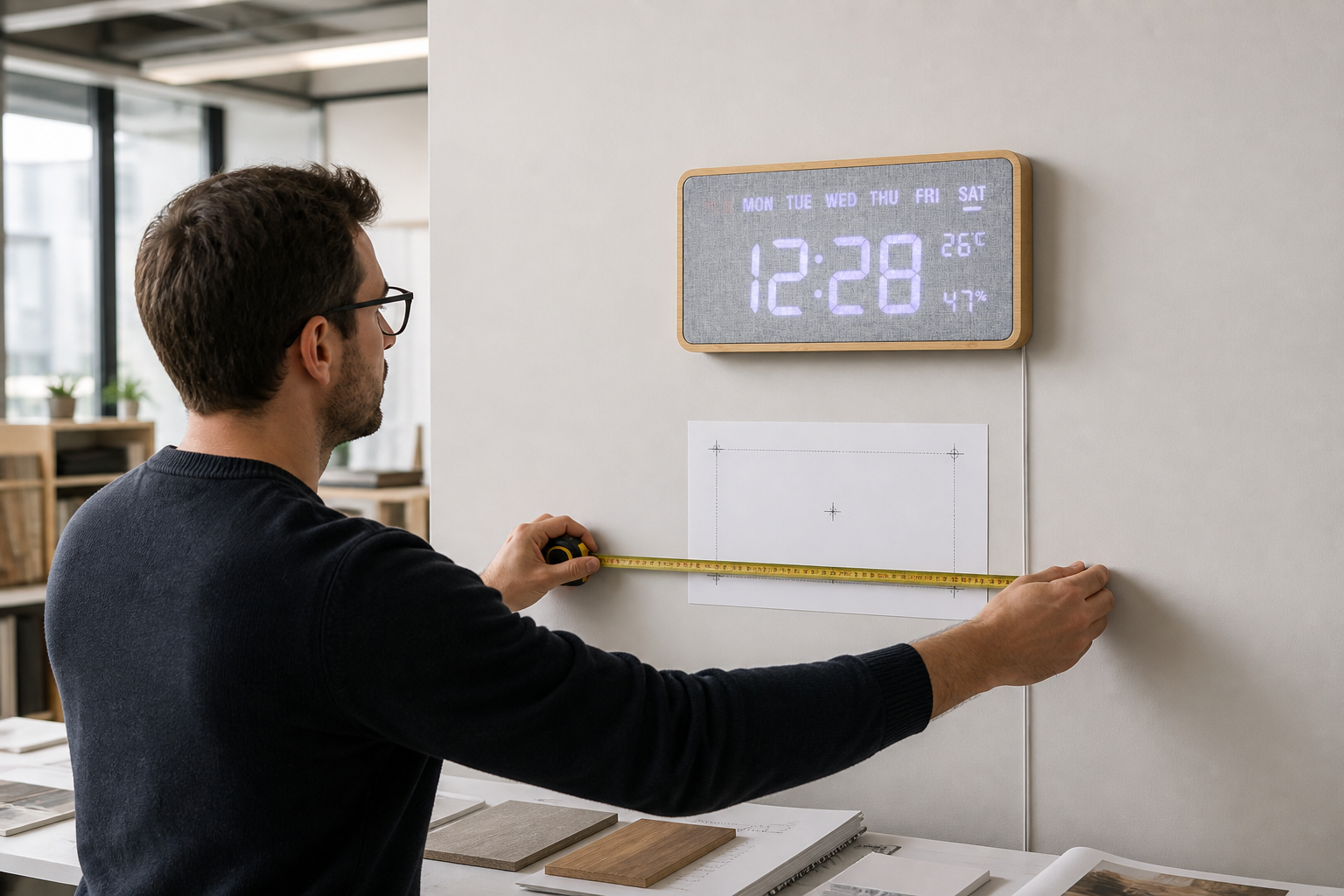
Use the G290 rectangular bamboo fabric wall clock as the controlled model. Its 265 × 20 × 135 mm body, natural bamboo frame, fabric front, wall-mounted installation and time, weekday, temperature and humidity display should remain tied to one sample.
Review the Rectangular Proportion at Full Scale
Print or cut a 265 × 135 mm outline and place it on the proposed wall before ordering. The wide, low profile can suit reception, studio and shared-work areas, but the same clock may feel small on a large feature wall.
Compare it with the G218A bamboo fabric wall clock only after the space and desired silhouette are clear. Different frame shapes should solve different interior requirements rather than duplicate one display job.
Check the Dual-Hole Mounting Pattern

The G290 specification lists dual back hanging holes and a slim 20 mm profile. Ask for a rear-view drawing or physical sample, confirm the hole spacing and build a level mounting template for the installer.
Test the approved hardware on the intended wall material. The buyer or installer should confirm anchors and load suitability for the actual building; a product supplier should not guess the fixing method from a wall photograph.
Plan Power and Cable Routing
Confirm the supplied power configuration and decide how any visible cable will travel before the clock is mounted. Check outlet position, cable length, wall channel or approved surface routing with the facilities team.
Do not hide unresolved power requirements behind a styled image. Record the final cable, accessory and installation note in the quotation, manual and sample approval so every site receives the same setup.
Test Viewing Distance and Display Hierarchy

The clock shows time, weekday, temperature and humidity. Review which field must be readable from the main approach and which information is intended for closer viewing.
Test in real daylight and evening lighting, including side angles created by corridors or open workspaces. A round model such as the G292B bamboo LED wall clock has a different display hierarchy and should be reviewed at its own scale.
Inspect the Fabric Front Under Directional Light
Directional light can reveal weave variation, shadows and alignment that a front-facing studio image does not show. View the fabric surface from several angles and approve the allowed color and texture range with the bamboo frame.
Check the gap around the fabric panel, frame corners and visible logo area. Natural material variation is expected, but the buyer and supplier still need a written reference for acceptable finish and assembly.
Treat Environmental Readings as Displayed Information
Temperature and humidity should be described as information shown by the product unless a specific accuracy statement and test method have been verified. Compare samples with a reference instrument under recorded room conditions.
Avoid turning a general wall display into a building-management or calibrated monitoring device. The product page, packaging and sales training should use the same verified boundary.
Pack the Slim Wall Clock for Distribution

The package should protect the long bamboo edges, fabric face, display components and back hanging points. Check the insert with the real clock, supplied power accessories, hardware and manual.
Use the broader wall clock size and installation guide to align carton planning and site instructions. A slim product still needs enough support to prevent bending, corner impacts and pressure on the fabric panel.
Send an Installation-Ready Inquiry
Include the G290 model, destination market, quantity, wall type, installation height, viewing distance, power-routing plan, logo requirement, packaging language and delivery schedule.
Request one complete sample set covering front finish, rear mounting, display behavior, accessories and finished package. This gives the distributor and installer a usable reference before rollout.
Build the specification before comparing the final price.
Align the target channel, product functions, destination market, branding and packaging route before approving a sample or bulk quotation.