
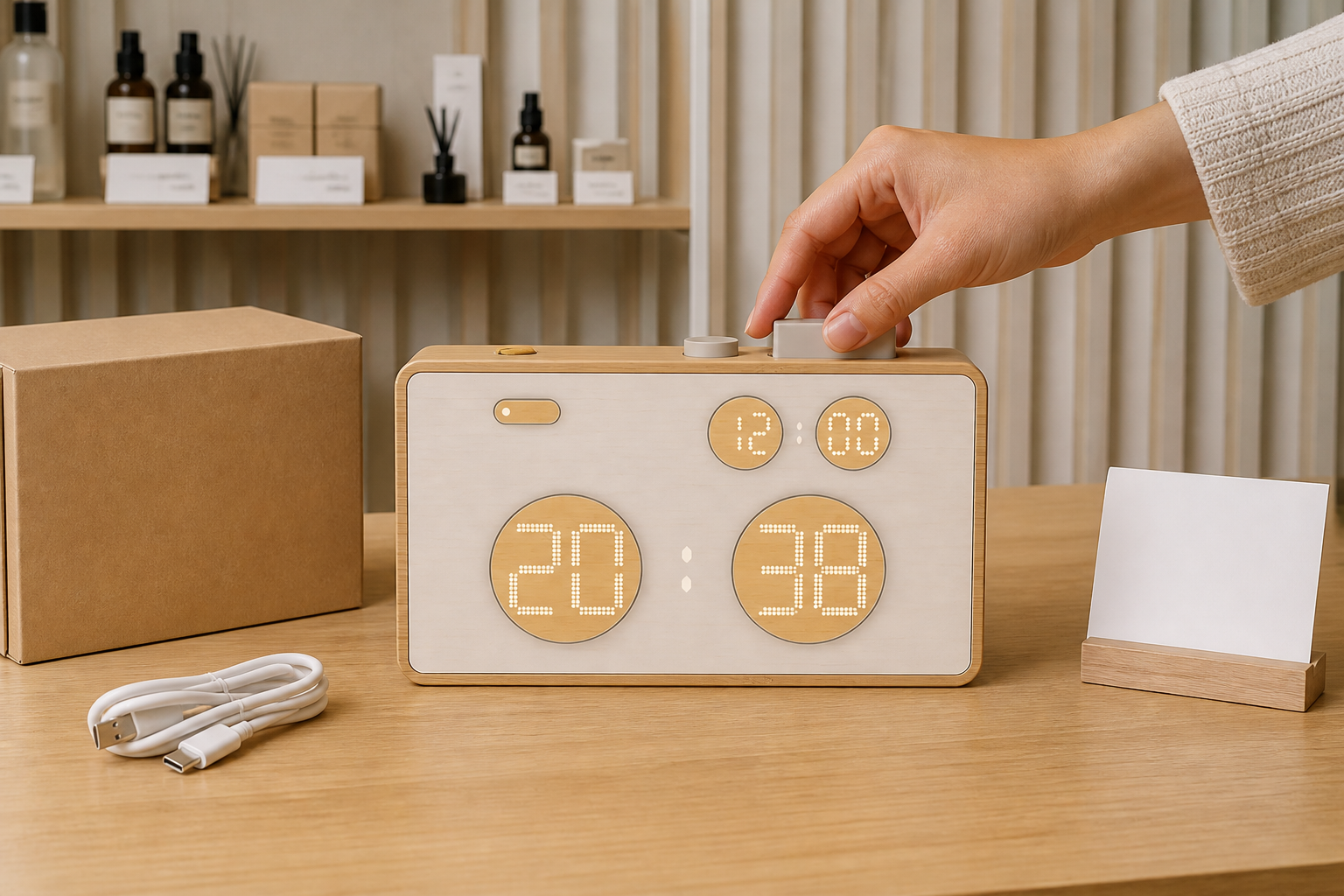
1916 Bamboo Natural Sound Alarm Clock Wholesale: Retail Demo Guide
Position the 1916 accurately, then test its controls, six natural sounds, alarm workflow, USB-C wording, display, store reset and finished retail pack.
Position the 1916 Without Medical Claims

The 1916 bamboo natural sound alarm clock wholesale offer can fit sleep, wellness, gift and home-accessory retail, but the channel story should stay within verified product functions. It is an alarm clock with an LED time display, physical controls and six natural sounds; it is not a medical or therapeutic device.
Start with the 1916 bamboo push-button alarm clock as the exact retail reference. Keep the natural bamboo body, USB-C power input, RELAX and SNOOZE controls, alarm support and 145 × 42 × 80 mm size connected to the same product sheet.
Demonstrate the Physical Controls First
Physical controls are easier to understand when the buyer can use them. Place the sample at a normal counter height and ask a staff member to locate the main controls without a rehearsed explanation.
Record where shoppers hesitate and whether the proposed display card solves the problem. A good demonstration shows the operating sequence clearly; it should not rely on attractive bamboo styling to hide an unclear control flow.
Test the Six Natural Sounds in a Real Store

The product specification lists six natural sounds. Review every sound on the approved sample, confirm the selection sequence and agree on a practical demonstration volume for the store environment.
A crowded trade show, quiet wellness shop and general gift store have different background noise. Test in the intended channel before writing staff instructions, and avoid claims about sleep quality, stress reduction or health outcomes that the product evidence does not support.
Write the Alarm and Snooze Steps Clearly
Ask a first-time user to set the alarm, confirm that it is active, use SNOOZE and return the clock to its normal state. The manual and quick card should use the same button names shown on the approved hardware.
Compare the number of steps with a simpler model such as the 2605 compact bamboo radio alarm clock only when the retailer has defined the customer job. Radio and natural-sound clocks need separate demonstrations and shelf wording.
Describe USB-C as Power Input
USB-C describes how the 1916 receives power. It should not be presented as a port that charges a shopper's phone unless a specific output function has been verified separately.
Confirm whether the quoted package includes a cable, an adapter or both, then use the same wording on the product page, carton, manual and retailer data sheet. Accurate power information reduces avoidable returns and support questions.
Check Display Visibility Under Retail Lighting

View the LED time display at the intended shelf height, from the aisle and from a customer standing at the demonstration table. Test it under daylight, warm shop lighting and any directional spotlights used in the display.
For a screen-led comparison, the 2106 bamboo LCD temperature clock has a different display job and should not share the same visual claim. Use exact model photos and separate feature bullets across the range.
Prepare a Store Reset Routine
A live sample may be handled many times each day. Give staff a short routine for restoring the time, alarm state, sound selection and demonstration volume before the store opens or after a customer session.
The routine should identify the exact 1916 model and approved control layout. Add the most common customer questions to the retailer sheet, then update the sheet if the production sample or manual changes.
Keep Packaging and Shelf Information Together

The package should protect the bamboo corners, front display and top controls while keeping the USB-C accessory separate from visible surfaces. Test the complete pack rather than approving an empty carton mockup.
Connect the shelf card, barcode label, manual language and inner packing to the same model revision. The broader bamboo alarm clock wholesale range guide can help position the 1916 without making nearby models look interchangeable.
Measure a Test Order Before Expanding
Start with a controlled store group and track demonstration use, customer questions, returns, sell-through and reorder requests. Record whether shoppers understand the natural-sound function before staff explanation and whether the physical controls improve the buying decision.
A wholesale inquiry should include country, channel, store count, expected quantity, package language, power accessory requirement and target delivery window. These details let the supplier quote a complete retail program instead of only a unit price.
Build the specification before comparing the final price.
Align the target channel, product functions, destination market, branding and packaging route before approving a sample or bulk quotation.