
1906 Bamboo LCD Humidity Clock Wholesale: Retail Range and Support Guide
Give the 1906 a clear retail role, then prepare the screen demonstration, setup information, packaging and support assets that help stores reorder with confidence.
Give the 1906 a Clear Retail Job

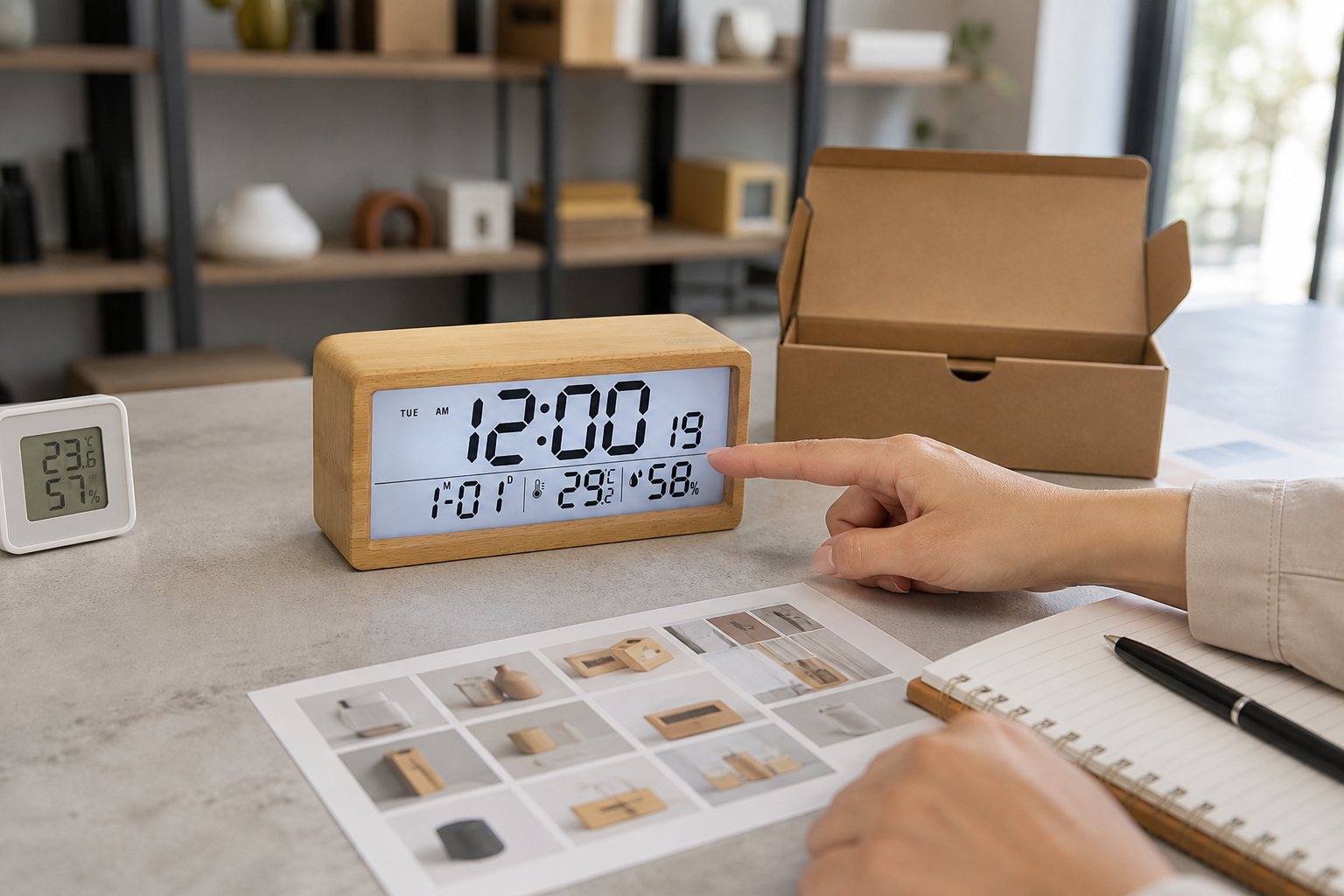
The 1906 is an information-led desk clock rather than a decorative LED block. Its LCD combines time, month, date, weekday, temperature, humidity and alarm information in a natural bamboo housing, so distributors should decide which customer problem those fields solve before adding it to a range.
Start with the 1906 bamboo LCD humidity clock. Position it for customers who want an easy desktop overview in an office, home workspace or practical gift range, while confirming the final supplied specification and instructions for the target market.
Demonstrate the Screen Before Discussing Features
Place the sample under bright retail light, normal indoor light and a darker setting. Ask a new user to identify the time, date, weekday, temperature and humidity without reading a sales sheet, then record any fields that are easy to confuse.
The soft backlight should also be demonstrated on the approved unit. Retail staff need to know how it is activated, how long it remains visible and whether the control sequence changes any other setting.
Match the Model to the Right Customer

Extra display fields are useful only when the shopper understands them. A home-office customer may value time and indoor conditions, while a basic gift buyer may prefer fewer settings and a simpler front presentation.
Compare the model with the 1294 bamboo LED desk clock when the range needs a clearer entry option. The 1906 should earn its position through information value and usability rather than being described as the universally better clock.
Verify Batteries, Backlight and Setup
The current product direction uses two AAA batteries. Confirm battery orientation, compartment access, initial setup and the backlight sequence on the exact wholesale sample. Do not assume batteries are included unless the quotation and final package specify them.
Test how long a first-time user needs to set the clock from the proposed instruction sheet. Record where the user loses the weekday, temperature unit or alarm setting so the distributor can improve the quick-start information before rollout.
Treat Temperature and Humidity as Displayed Information
Compare several samples with a reference meter after all units have settled in the same room. Record the location, time and conditions rather than judging the fields immediately after unpacking or moving the clocks.
Avoid unsupported precision, health or climate-control claims. The product displays indoor information; the approved sales sheet should describe the tested behavior and direct professional monitoring needs to appropriate instruments.
Prepare Retailers for Common Questions

Create a one-page support note covering batteries, 12/24-hour change, C/F switching, date and weekday setup, alarm operation and backlight use. Use photographs of the exact control layout and keep the model number visible in internal retailer files.
Link retailer staff to the broader bamboo alarm clock wholesale range guide when they need to distinguish LCD information clocks from LED, radio or charging models. Clear category boundaries reduce returns caused by the wrong expectation.
Build Packaging Around Readability and Protection
The front LCD and bamboo edges need protection from rubbing, impact and pressure. Approve the insert, bag, manual position and accessory area with a completed packed sample, then confirm that the product image and displayed fields on the box match the supplied model.
Record individual-box dimensions, gross weight, master-carton quantity and carton marks. A compact product may still create inefficient freight or shelf use if the box is oversized or the insert cannot support normal distribution handling.
Use a Test Order to Measure Reorder Potential

Choose a small set of retailers or online listings and track sell-through, setting questions, battery questions, backlight feedback, returns and damage. Separate user-education issues from verified faults so a reorder is based on useful evidence.
Compare the result with the 2106 bamboo LCD temperature clock only when each model has a distinct price and buyer role. Reordering two similar LCD clocks without clear segmentation can split demand instead of expanding the category.
Send a Wholesale Inquiry With Channel Details
Prepare the destination market, sales channel, estimated quantity, target customer, packaging language, battery policy, logo needs and test-order plan. Include the 1906 product link and identify the models that will sit beside it in the range.
Woodshowtime can then prepare a focused sample and quotation structure. The discussion stays centered on retail understanding, support workload and reorder evidence instead of a generic request for bamboo clocks.
Build the specification before comparing the final price.
Align the target channel, product functions, destination market, branding and packaging route before approving a sample or bulk quotation.